Signed in as:
filler@godaddy.com
For most of human history, nobody knew how many grams of protein they were eating.
There were no protein shakes. No protein puddings. No protein-enriched breakfast cereals.
Yet people still managed to build muscle, raise families, work physically demanding jobs and grow old.
Today, however, protein has become one of the most aggressively marketed nutrients on the planet. Walk through any supermarket and it's difficult to avoid the message. Protein has been added to foods that never needed it, often wrapped in the promise of better health, greater satiety or improved body composition.
The irony is that many of the people buying these products are already consuming adequate protein. Meanwhile, the people who genuinely stand to benefit from higher protein intake, particularly older adults losing muscle mass as they age, are often the least aware of its importance.
Protein matters.
But not always for the reasons social media would have you believe.
Protein is one of the three major macronutrients, alongside carbohydrate and fat.
Unlike carbohydrates and fats, protein isn't primarily an energy source. Its primary role is structural and functional.
Every cell in your body contains protein. Your muscles, skin, immune system, enzymes, hormones and connective tissues all depend upon it.
At its simplest level, protein is built from smaller molecules called amino acids.
These amino acids are often described as the body's building blocks, and for good reason. Everything from repairing a muscle after exercise to producing neurotransmitters in the brain depends upon them.
But not all amino acids are equal.
There are twenty amino acids commonly used by the human body.
Eleven can be produced internally.
Nine cannot.
These nine are known as essential amino acids because we must obtain them from food.
One amino acid deserves particular attention.
Leucine.
Leucine acts almost like a biological switch for muscle protein synthesis. When sufficient leucine is present, it helps signal the body to repair and build muscle tissue. This is one reason why not all protein sources have the same effect on muscle growth and maintenance.
This is also why protein quality matters.
The conversation around protein often focuses on quantity.
How many grams?
How many shakes?
How many scoops?
Yet quality may be just as important.
Animal proteins such as eggs, dairy, fish and meat generally contain all essential amino acids in proportions that efficiently support muscle protein synthesis. Plant proteins can absolutely contribute to optimal health, but individual sources may contain lower amounts of specific amino acids, requiring greater variety to achieve the same amino acid profile.
This doesn't mean meat is mandatory.
It simply means diversity matters.
Much like the fibre and polyphenol story, the answer is rarely found in a single food.
When people ask how much protein they need, they're usually expecting a single number.
The reality is more nuanced.
The official Recommended Dietary Allowance is approximately 0.8g per kilogram of body weight. However, this amount was designed primarily to prevent deficiency, not necessarily to optimise muscle mass, physical performance or healthy ageing.
This distinction is important.
There's a substantial difference between the amount of protein required to avoid deficiency and the amount that may support long-term health and resilience.
Researchers and practitioners such as Andy Galpin, Andrew Huberman and Stacy Sims frequently discuss intakes closer to 1.6-2.2g/kg/day, particularly for active individuals looking to support muscle retention, recovery and performance.
That doesn't mean everybody needs bodybuilder levels of protein.
It does mean that the minimum requirement and the optimal requirement may not be the same thing.
It's Muscle Loss.
When most people think about protein, they think about building muscle.
The more important conversation may be keeping it.
From around our fourth decade of life, we gradually begin losing skeletal muscle mass. This process accelerates with age and can eventually lead to sarcopenia, the age-related loss of muscle mass, strength and physical function.
Sarcopenia isn't just about looking less muscular.
It affects mobility.
Balance.
Independence.
Metabolic health.
Risk of falls.
Quality of life.
In many ways, ageing successfully is less about preventing wrinkles and more about preserving muscle.
And that's where protein becomes genuinely important.
Not because you're chasing visible abs.
But because you're planning for your future self.
One fascinating concept that keeps appearing in the research is something known as anabolic resistance.
As we get older, our muscles become less responsive to both protein intake and resistance exercise. In practical terms, older adults often require a greater stimulus to achieve the same muscle-building response as younger adults.
This is one reason Stacy Sims places so much emphasis on protein intake during peri-menopause and post-menopause. As oestrogen declines, maintaining muscle becomes more difficult, making adequate protein and resistance training increasingly important.
A theme you'll hear repeated across the work of Sims, Galpin and Huberman is remarkably consistent:
Build muscle while you can. Preserve it for as long as possible.
Social media loves nutritional disagreement.
Protein is one area where there is actually a surprising amount of agreement.
What's interesting is that very little of this requires protein-enriched ice cream.
None of this means every food suddenly needs extra protein.
An apple doesn't become healthier because somebody added whey protein to it.
Protein chocolate is still chocolate.
Protein cereal is often still cereal.
Protein biscuits are usually still biscuits.
The food industry has become extremely effective at taking a genuine nutritional truth and stretching it into a marketing opportunity.
Protein is important.
That doesn't mean protein-added ultra-processed foods automatically become healthy.
The question shouldn't be:
"How much protein can I add?"
It should be:
"Where is my protein coming from?"
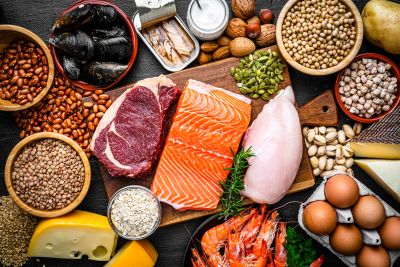
Eggs.
Greek yoghurt.
Fish.
Legumes.
Lentils.
Beans.
Quality meat.
Tofu.
Tempeh.
These foods bring considerably more to the table than protein alone.
Protein matters.
Not because fitness influencers say it does.
Not because food manufacturers have discovered a new marketing angle.
And not because every meal needs to resemble a bodybuilder's diet.
Protein matters because muscle matters.
Muscle is one of the most important organs of healthy ageing. It influences strength, metabolism, mobility, resilience and independence. Much of what we think of as ageing is actually the gradual loss of muscle mass and function over time.
The goal isn't to obsess over grams.
The goal is to regularly eat good-quality protein, stay physically active and, perhaps most importantly, continue challenging your muscles throughout life.
Because when it comes to longevity, the question isn't how much muscle you can build at 30.
It's how much you can keep at 80.