Signed in as:
filler@godaddy.com
Walk through any supermarket and you'll quickly find cereals, snack bars, yoghurts and even sweets proudly displaying "high fibre" claims. The implication is that fibre is something manufacturers add to foods to make them healthy.
The reality is almost the opposite.
Fibre isn't something that belongs in a factory. It's something that naturally exists within the structure of whole plant foods. Fruits, vegetables, legumes, nuts, seeds and whole grains evolved with fibre built into them. When food processing strips away that structure, much of the fibre disappears, and what remains is often a nutritionally inferior version of the original food.
In many ways, fibre is one of the clearest examples of why whole foods outperform heavily processed alternatives.
Dietary fibre is the portion of plant foods that human digestive enzymes cannot break down. Unlike sugars and starches, fibre passes through the small intestine largely intact and reaches the colon, where it becomes food for trillions of microbes living in the gut.
For years, fibre was viewed simply as "roughage" that helped people stay regular.
Today we know it's far more than that.
Fibre influences cholesterol levels, blood sugar control, satiety, immune function, inflammation, gut barrier integrity and the composition of the microbiome itself. Many researchers now consider fibre one of the most important determinants of long-term gut health.
The word "fibre" is often used as if it's a single nutrient. In reality, fibre is a large family of compounds with very different functions.
Soluble fibre dissolves in water and forms a gel-like substance in the digestive tract.
Its benefits include:
Common sources include oats, beans, lentils, apples, citrus fruits, avocados and carrots.
Insoluble fibre does not dissolve in water.
Its main role is providing bulk and supporting healthy bowel movements. It acts like a structural scaffold that helps food move efficiently through the digestive tract.
Sources include:
One of the most interesting forms of fibre isn't technically classified as fibre on many nutrition labels.
Resistant starch escapes digestion in the small intestine and travels to the colon where microbes ferment it.
Sources include:
Resistant starch is particularly effective at increasing production of beneficial short-chain fatty acids such as butyrate.
Some fibres act as highly selective fertiliser for beneficial bacteria.
Examples include:
These are found naturally in foods such as:
Studies consistently show these fibres increase populations of beneficial microbes, including Bifidobacteria and Lactobacilli.
Many processed foods now contain isolated fibres added after manufacturing.
Common examples include:
While some of these may have benefits, a fibre-fortified biscuit isn't equivalent to an apple.
Why? Because fibre never works alone in nature. A raspberry doesn't just provide fibre. It delivers:
When foods are processed, fibre is often stripped away alongside many of these components. Manufacturers may later add isolated fibre back in to improve the nutrition label, but that doesn't recreate the complexity of the original food.
In other words, a "high fibre" breakfast bar is often evidence that the food required fixing in the first place.
Consider the difference between an orange and orange juice.
A whole orange requires chewing. Digestion occurs gradually. The fibre slows absorption and supports satiety.
Orange juice contains much of the sugar but very little of the original fibre structure. The result is faster absorption, reduced fullness and less material available for feeding beneficial gut bacteria.
The same pattern occurs across countless processed foods. The closer food remains to its natural state, the more of its original fibre architecture is preserved.
Nature packages nutrients together for a reason. Processing frequently separates them.
This is where things become truly fascinating.
Humans cannot digest fibre, but gut bacteria can.
When beneficial microbes ferment fibre, they produce compounds known as short-chain fatty acids (SCFAs), primarily:
These compounds act as powerful signalling molecules throughout the body.
Butyrate serves as the preferred fuel source for the cells lining the colon.
It helps:
Propionate appears to play important roles in:
Acetate is the most abundant SCFA and is utilised throughout the body as both an energy source and signalling molecule.
The remarkable thing is that these beneficial compounds are not found in food itself.
They are manufactured inside you by gut microbes when you feed them properly.
While fibre is arguably the most important nutrient for feeding the microbiome, it isn't acting alone.
Many plant foods also contain polyphenols, naturally occurring compounds that interact closely with gut microbes. Coffee is a fascinating example. Despite containing relatively little fibre compared with vegetables, legumes or berries, coffee appears to exert meaningful effects on the microbiome through its rich polyphenol content.
A study published in Nature Microbiology found one of the strongest diet-microbe associations reported to date, showing that regular coffee consumption was consistently linked with a greater abundance of the bacterium Lawsonibacter asaccharolyticus across multiple independent populations. This finding highlights an important principle: a healthy microbiome thrives not only on fibre but on a diverse intake of naturally occurring plant compounds.
That doesn't mean coffee replaces vegetables or fibre-rich foods. Rather, it reinforces the idea that the healthiest diets provide a broad range of fibres, resistant starches and polyphenols that nourish different microbial species in different ways.
One bacterial species generating enormous scientific interest is Akkermansia muciniphila.
Higher levels of Akkermansia have been associated with favourable metabolic health, improved gut barrier function and a healthier gut environment in numerous studies.
Akkermansia appears to flourish in individuals consuming diverse, plant-rich diets containing a variety of fibres and bioactive compounds.
While no single food magically increases Akkermansia, diets rich in:
All appear to create the conditions in which this beneficial bacterium can thrive. Think of fibre less as feeding you and more as feeding your microbial workforce. Healthy microbes help create healthy humans.
When most people think fibre, they think bran cereals.
Some of the best sources may surprise you.
High-Fibre Foods That Often Fly Under The Radar
Avocado
Raspberries
Artichokes
Lentils
Chia Seeds
Cocoa Powder
Pistachios
Cooked-and-Cooled Potatoes
Black Beans
Perhaps the biggest mistake people make is focusing purely on grams.
Thirty grams of fibre from one source is not the same as thirty grams from twenty different plant foods.
Different species of bacteria specialise in digesting different fibres. The greater the diversity of fibres entering the gut, the greater the diversity of microbes that can flourish there.
This is why diets rich in varied fruits, vegetables, herbs, legumes, nuts and seeds consistently outperform fibre-fortified processed foods.
The question shouldn't simply be:
"How much fibre did I eat today?"
It should also be:
"How many different plants did I eat today?"
Fibre isn't simply about preventing constipation. It is one of the primary ways in which the food you eat communicates with the microbes living inside you.
Many products marketed as "high fibre" contain isolated fibres added back into foods that processing stripped down in the first place. While these products may contribute some fibre, they rarely replicate the complexity of whole foods.
The goal shouldn't be to chase fibre-fortified cereals, snack bars or supplements.
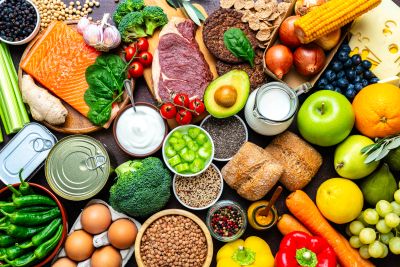
Instead, aim to eat a diverse range of minimally processed plants. Fruits, vegetables, legumes, nuts, seeds, herbs, spices, resistant starches and even microbiome-friendly foods such as coffee all contribute to a richer ecosystem within the gut.
Because when you eat fibre, you're not just feeding yourself.
You're feeding the trillions of microbes that manufacture beneficial compounds, help maintain the gut barrier, influence immune function and may play a role in everything from metabolic health to healthy ageing.
And increasingly, the science suggests that those tiny organisms may have more influence over our health than we ever imagined.
https://www.nature.com/articles/s41564-024-01858-9
This large multi-cohort analysis identified one of the strongest diet-microbe associations reported to date, linking regular coffee consumption with higher abundance of Lawsonibacter asaccharolyticus across diverse populations.
For readers interested in taking gut health beyond fibre alone, emerging areas of research include:
Disclaimer: This article is for educational purposes only and should not be considered medical advice. Individuals with gastrointestinal conditions, food intolerances or specific medical concerns should consult an appropriately qualified healthcare professional before making significant dietary changes.